
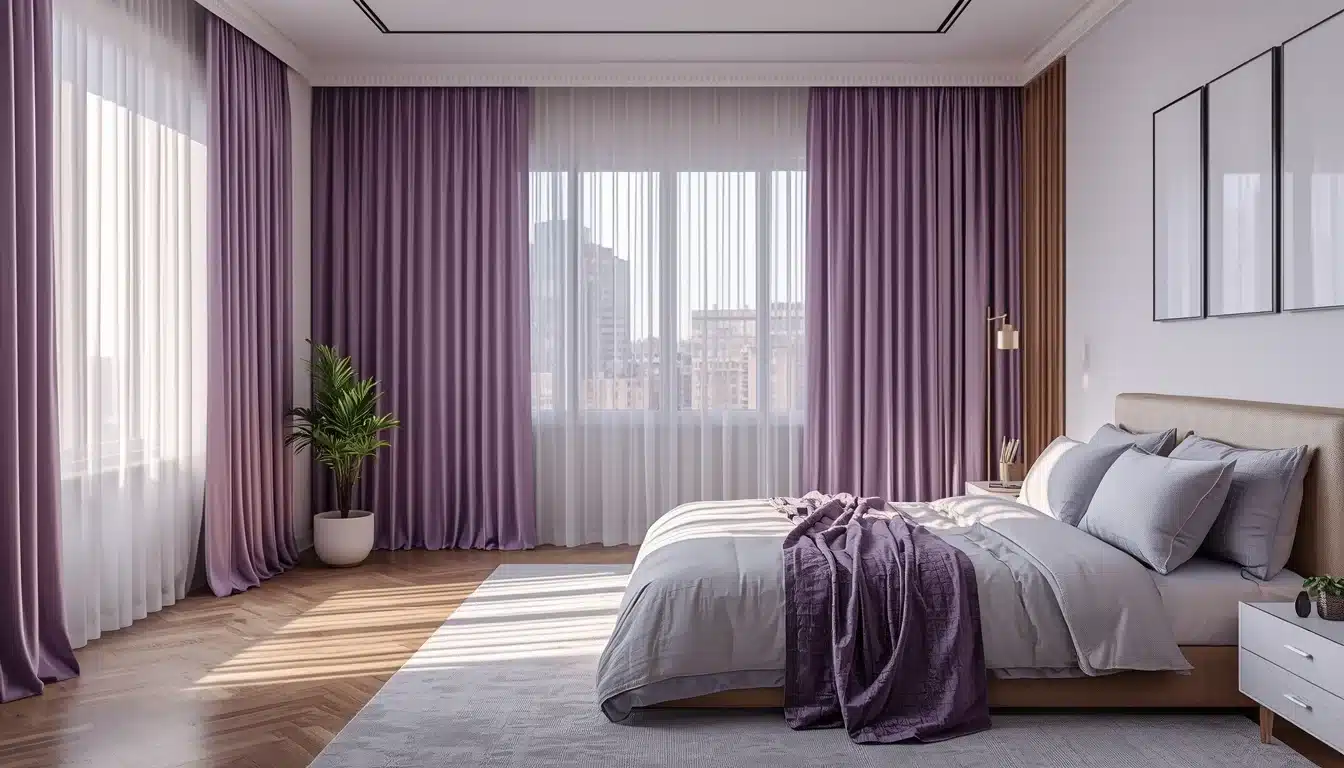
Window treatments are often the final layer of a room, yet they carry the heaviest weight in defining its atmosphere. In a bedroom, curtains act as the soft architecture that bridges the gap between the hard lines of the walls and the comfort of the bed. Choosing purple bedroom curtains ideas allows you to tap into a unique color psychology that balances the coolness of blue with the warmth of red, creating a sanctuary that feels both curated and deeply personal.
Purple is a versatile choice for the bedroom because it shifts effortlessly with the light. Whether you are aiming for a whisper of lavender to catch the morning sun or a deep plum to create an evening cocoon, this hue brings a sophisticated energy that neutral tones often lack.
Why Purple Curtains Work So Well in Bedrooms
The primary reason designers return to purple for window treatments is its inherent ability to create mood without feeling aggressive. Unlike bright reds or yellows, purple recedes visually, which helps a bedroom feel more expansive and quiet.
Beyond aesthetics, purple curtains offer excellent light management. Because the pigment is naturally dense, even mid-tone purples are highly effective at diffusing harsh glare, turning sharp daylight into a soft, ethereal glow. This adds a layer of visual warmth to the room, making the space feel inhabited and cozy even during the brightest parts of the day.
Choosing the Right Shade of Purple
Selecting a shade is less about following trends and more about understanding the natural light available in your home.
Light Purples: Lavender and Lilac
These shades are ideal for smaller bedrooms or spaces with limited windows. Lavender has a way of reflecting light that makes a room feel airy and fresh. It mimics the early morning sky, promoting a sense of wakefulness and clarity. If your bedroom feels slightly cramped, a lighter purple can provide color without closing the space in.
Dark Purples: Plum and Eggplant
Deep, saturated purples are the hallmark of a sophisticated master suite. These tones absorb light, making them perfect for bedrooms that receive a lot of afternoon sun or for homeowners who prefer a darker, more cave-like sleeping environment. Dark purple adds a “weight” to the windows that feels intentional and luxurious.
Fabric & Style Ideas for Purple Bedroom Curtains
The material you choose will dictate how the purple pigment interacts with your room.
- Sheer Purple Curtains: If you want the color to be a mere suggestion rather than a statement, sheers are the answer. A soft lilac sheer allows plenty of natural light to filter through, casting a delicate tint across the rest of the decor. These are best used in guest rooms or paired with blinds for privacy.
- Velvet Styles: For those seeking drama and acoustic dampening, purple velvet is unmatched. The pile of the fabric catches the light in the folds, showing off the various dimensions of the color—from bright highlights to deep, shadowy lowlights.
- Linen Textures: Linen in a dusty plum or muted grape offers a more organic, “lived-in” feel. The natural slubs in the fabric break up the color, preventing it from looking too flat or heavy. This is a favorite for modern farmhouse or transitional styles.
- Blackout Options: When functionality is the priority, a heavy-duty purple blackout curtain provides total light blockage while maintaining a high-end look.
Purple Curtains for Different Bedroom Types
In a small bedroom, the goal is to keep the eye moving. Choosing a purple that is only one or two shades darker than your wall color creates a seamless look that prevents the room from feeling “chopped up.”
For a master bedroom, layering is key. You might pair a heavy eggplant drape with a crisp white or pale lavender sheer underneath. This gives you total control over privacy and light throughout the day.
In apartments or rentals, where walls are often a standard “rental beige,” purple curtains are a powerful way to inject personality without painting. A vibrant violet or a muted mauve can completely transform the “white box” feel of a standard apartment.
How to Match Purple Curtains With Other Bedroom Decor
The secret to a professional-looking room is how the curtains talk to the rest of the space.
- Wall Colors: Purple looks stunning against light gray, sage green, or creamy whites. If you have navy walls, a deep plum can create a moody, tonal look that feels very high-end.
- Bedding: You don’t need a purple comforter to match purple curtains. In fact, white or flax-colored bedding often looks better, as it allows the curtains to be the focal point.
- Furniture Finishes: Gold or brass hardware and curtain rods sing when paired with purple. For wood tones, dark walnut or reclaimed oak provides a grounding contrast to the softness of the fabric.
Common Mistakes to Avoid
One of the most frequent errors is hanging curtains too low or choosing a width that is too narrow. Purple is a bold choice; if the curtains look “skimpy” on the rod, the color can feel accidental rather than intentional. Always aim for the rod to be at least 6–10 inches wider than the window frame on each side.
Another pitfall is ignoring the “temperature” of the purple. A blue-toned purple (like periwinkle) may clash with a room full of warm oranges and yellows. Always hold a fabric swatch up in your specific bedroom lighting before committing to a full set of panels.
Soft Product Inspiration
When looking for specific styles to begin your search, consider these two timeless directions:
- Purple sheer bedroom curtains: Look for options with a “crushed” texture or a linen-blend to add a bit of visual interest to the transparency.
- Purple blackout bedroom curtains: Seek out “triple-weave” fabrics which offer the light-blocking benefits without the stiff, plastic feel of traditional liners.
Final Thoughts
Integrating purple curtains into your bedroom is an exercise in balance. It is a color that rewards the brave but appreciates subtlety. By focusing on how the fabric feels and how the specific shade interacts with your morning and evening light, you can create a space that feels tailored to your personal rhythm. Trust your eye, prioritize the quality of the light, and let the color bring the tranquility your bedroom deserves.
Frequently Asked Questions about Purple Bedroom Curtain Ideas
Are purple curtains actually suitable for a restful bedroom environment?
Absolutely. Purple sits at a unique intersection of color psychology. While red is energizing and blue is cooling, purple provides a balanced “stable” energy. Lighter shades like lilac promote tranquility and stress reduction, while deeper tones like plum offer a sense of security and enclosure, making them excellent for creating a restorative sleep sanctuary.
Which shade of purple works best for a small bedroom without making it feel cramped?
For smaller spaces, it is best to lean toward “cool” purples like lavender or iris. These shades have a high blue content, which causes the fabric to visually recede, making the walls feel further away than they actually are. To maximize this effect, try to match the curtain color closely to your wall color to create an unbroken visual line.
Do purple curtains make a bedroom feel significantly darker?
It depends entirely on the saturation and the fabric weave. A deep eggplant velvet will naturally absorb more light than a sandy beige, even when open. However, if you love dark colors but fear a “cave” effect, look for purple linens or cotton blends. These fabrics have a looser weave that allows some light to pass through the fibers, maintaining a sense of daytime brightness.
How do I match purple curtains with my existing bedding?
You don’t need to match them perfectly; in fact, a monochromatic “set” can often feel dated. If your curtains are a bold purple, try neutral bedding in cream, charcoal, or eucalyptus green to let the windows stand out. If you prefer a coordinated look, choose bedding that features purple in the pattern (like a floral or geometric print) rather than a solid block of the same color.
Are blackout purple curtains a good choice for light sleepers?
Purple is one of the best colors for blackout functionality. Because purple pigments are naturally dense, they are exceptionally good at preventing light bleed. A high-quality purple blackout curtain not only blocks the sun but also helps regulate room temperature and dampen outside noise, which are essential factors for uninterrupted sleep.
Can purple curtains work in a strictly modern or minimalist bedroom?
Yes, but the “style” of the curtain is what matters here. For a minimalist look, avoid ruffles, heavy patterns, or shiny satins. Instead, choose a flat-panel or grommet-style curtain in a muted, “dusty” purple or a deep, matte plum. This adds a sophisticated pop of color without breaking the clean, functional lines of a modern aesthetic.
Is it better to use warm or cool tones of purple for window treatments?
This depends on your bedroom’s orientation. If your room faces North and gets “cold” blue light, a warm, reddish-purple like mauve or magenta can make the space feel much cozier. If your room faces South and gets hit with hot afternoon sun, a cooler, bluish-purple like periwinkle will help balance the temperature and keep the room feeling refreshed.

Muhammad Shahzad is a home décor and lifestyle content specialist who focuses on color-themed product research and buyer-focused reviews. He creates user-first content by analyzing product quality, real-world usability, design appeal, and value for money—helping readers make confident purchase decisions. His work emphasizes clear comparisons, practical guidance, and honest recommendations tailored for U.S. online shoppers.

One Comment
Comments are closed.