
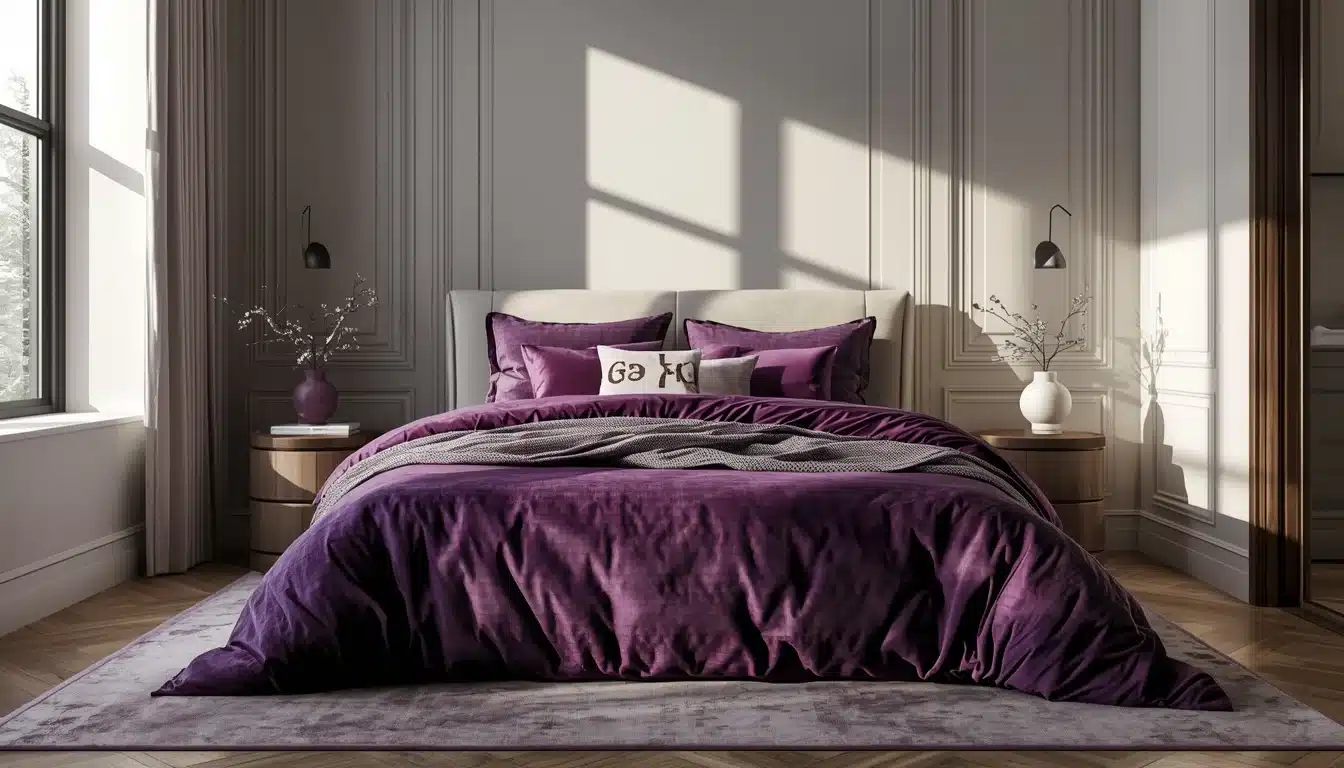
In my decade of styling bedrooms across the US, I’ve found that the bed is the absolute anchor of the room. It is the largest visual element, meaning whatever you choose to put on top of it dictates the mood for everything else. While neutrals are a safe standard, color is where a house becomes a home.
Purple is often misunderstood in interior design. Clients sometimes worry it will look juvenile or overly dramatic, but when styled correctly, it is incredibly sophisticated. It bridges the gap between the calm stability of blue and the fierce energy of red. This guide explores creative purple bedding ideas to help you introduce this versatile color into your sanctuary with confidence and balance.
Why Purple Bedding Works So Well in Bedrooms
The bedroom is the one place in the home that demands a specific feeling: sanctuary. Purple works beautifully here because it is naturally calming without being cold. Unlike a stark gray or a clinical white, purple carries an inherent warmth.
Visually, purple adds depth. A bedroom should feel distinct from the active areas of the house, like the kitchen or living room. Using purple bedding signals a shift in energy. It invites relaxation.
From a personality standpoint, this color is a chameleon. It can feel regal and moody in a dimly lit room, or airy and fresh in a sun-drenched space. It suits the sleeper who wants their room to feel like a retreat rather than just a place to crash.
Choosing the Right Shade of Purple for Bedding
The specific shade you choose can make or break the design. I always tell my clients to look at their lighting before committing to a fabric color.
- Light Purple (Lavender, Lilac): These shades act almost like neutrals. They are airy, crisp, and calming. They work exceptionally well in smaller rooms or rooms with limited natural light because they don’t visually “shrink” the space.
- Medium Tones (Mauve, Dusty Purple): This is the “sweet spot” for modern homes. Dusty shades have a bit of gray mixed in, which grounds the color and makes it feel mature and earthy. It feels very organic and pairs easily with wood furniture.
- Dark Purple (Plum, Eggplant, Fig): These are your drama colors. They bring immediate coziness and intimacy. However, they have a lot of visual weight, so they work best in larger rooms or applied as accents (like a duvet folded at the foot of the bed) to avoid overwhelming the eye.
Popular Types of Purple Bedding Sets
When you start looking for layers, the material matters just as much as the color. The texture of the fabric interacts with the dye, changing how the purple looks to the naked eye.
A linen purple bedding set, for example, will usually look more matte and relaxed. The natural slubs in the fabric catch the light, making the purple feel lived-in and soft. This is wonderful for a casual, effortless look.
On the other hand, a sateen or velvet duvet cover will reflect light. This makes the purple look deeper, richer, and more jewel-toned. I often suggest this for master suites where you want a touch of glamour.
You can also mix and match. You don’t always need a “bed in a bag” solution. A common stylist trick is to use a white or cream sheet set as a base, and then layer a textured purple duvet or quilt on top. This breaks up the color block and keeps the look fresh.
Purple Bedding Ideas for Different Bedroom Styles
- The Minimalist Bedroom: You can absolutely do purple in a minimal room. Stick to solid colors without patterns. A washed linen duvet in a pale lavender provides color without chaos. Keep the pillows simple and the lines clean.
- The Modern Bedroom: Here, you can play with contrast. A deep plum duvet looks striking against a crisp white wall and black metal light fixtures. It feels intentional and graphic.
- The Cozy/Boho Bedroom: This style loves layers. Think about a mauve quilt layered over soft cotton sheets, topped with a chunky knit throw. The goal here is to make the bed look inviting and soft, using the purple tones to add warmth.
- The Guest Bedroom: I often recommend lighter, universally appealing shades for guest rooms. A soft lilac is welcoming and fresh, ensuring the room feels clean and prepared for visitors without feeling too personal or moody.
How to Match Purple Bedding With Bedroom Decor
The key to styling purple is knowing what to pair it with. You want the bedding to be the star, but it needs a supporting cast.
- Curtains: Avoid matching the curtains exactly to the bed. It makes the room feel boxed in. Instead, try crisp white sheers to keep things airy, or a oatmeal-colored linen drape to add natural texture.
- Rugs: If you have purple bedding, a neutral rug is usually your best friend. A beige wool rug or a jute rug adds warmth without fighting for attention. If you want a patterned rug, look for one that has tiny hints of purple in the weave to tie it together.
- Wall Colors: Gray and cream are the classic wall pairings for purple bedding. However, don’t overlook green. Deep forest green plants or artwork paired with purple bedding creates a stunning, organic vibe.
- Furniture: Purple loves wood. It looks rich against dark walnut and fresh against light oak. If you have painted white furniture, purple bedding will make the room feel very cottage-like and breezy.
Seasonal Purple Bedding Styling Ideas
Your bed doesn’t have to look the same year-round. Swapping your bedding is the easiest way to acknowledge the changing seasons.
- Summer Styling: In the warmer months, lean into the “cool” side of purple. Lilac sheets or a very lightweight lavender coverlet feel refreshing when the temperature rises. Stick to breathable fabrics like cotton percale or linen.
- Winter Styling: When the air gets crisp, switch to the “warm” side. This is the time for velvet throw pillows in eggplant or a heavy duvet in a rich fig color. The darker tones absorb light and make the room feel cocoon-like and cozy, perfect for hibernation.
Common Mistakes to Avoid With Purple Bedding
Even with the best intentions, things can go wrong. Here are a few things I gently steer clients away from:
- The “One Note” Room: Avoid buying a rug, curtains, and bedding all in the exact same shade of purple. It flattens the room and makes it feel like a catalogue page rather than a home.
- Ignoring Undertones: Purple can lean blue (cool) or red (warm). Make sure your bedding undertone doesn’t clash with your wall color. A blue-purple duvet might look jarring against a warm, yellow-cream wall.
- Too Much Darkness: If you have a small room with small windows, covering the bed in a massive, dark purple comforter can make the space feel cave-like. In these cases, use the dark purple as a throw blanket rather than the main event.
Final Thoughts
At the end of the day, your bedroom is for you. While there are design principles that help a room look balanced, the most important factor is how the space makes you feel. Purple bedding is a flexible, elegant choice that allows you to express personality while maintaining comfort.
Whether you choose a whisper-soft lavender or a bold, deep violet, the goal is to create a space where you can exhale. Trust your eye, pay attention to the light in your room, and don’t be afraid to layer different textures to create a bed that looks as good as it feels.
Frequently Asked Questions About Purple Bedding
Is purple bedding suitable for everyday bedroom use?
Yes, purple bedding works very well for everyday use when the shade and fabric are chosen carefully. Softer tones like lavender or dusty purple feel calm and relaxing, making them ideal for daily comfort rather than just decorative use.
What shade of purple bedding is best for a relaxing bedroom?
Light to medium shades such as lavender, lilac, or mauve are the most relaxing. These colors create a peaceful atmosphere and don’t overpower the room, especially when paired with neutral walls and natural textures
Can purple bedding work in small bedrooms?
Absolutely. In smaller bedrooms, lighter purple bedding helps add color without making the space feel cramped. Choosing breathable fabrics and keeping the rest of the décor simple prevents the room from feeling heavy.
How do I stop purple bedding from looking too dark or dramatic?
Balance is key. If your bedding is a darker purple, pair it with lighter sheets, neutral walls, and natural light. You can also use dark purple as a top layer or accent instead of covering the entire bed.
Does purple bedding match neutral bedroom décor?
Yes, purple pairs beautifully with neutrals like white, cream, beige, and soft gray. These colors allow the bedding to stand out while keeping the overall bedroom calm and cohesive.
What fabric works best for purple bedding?
The best fabric depends on comfort and season. Cotton and linen feel fresh and breathable, while velvet or sateen adds richness and warmth. The fabric choice also affects how deep or soft the purple shade appears.
Can I use purple bedding all year round?
Yes, purple bedding is very versatile. Lighter fabrics and shades work well in summer, while richer tones and layered textures are perfect for winter. Swapping just the top layer can easily refresh the bed seasonally.

Muhammad Shahzad is a home décor and lifestyle content specialist who focuses on color-themed product research and buyer-focused reviews. He creates user-first content by analyzing product quality, real-world usability, design appeal, and value for money—helping readers make confident purchase decisions. His work emphasizes clear comparisons, practical guidance, and honest recommendations tailored for U.S. online shoppers.


One Comment
Comments are closed.